The 2017 PDC Hypothetical Asteroid Impact Scenario, Day 2: November 30, 2018

Recommendations

International Asteroid Warning Network Working Group
  • Use all available and necessary ground-based observation methods and existing space-based including JWST, to get the best physical characterization possible
  • A successful flyby is critical to reduce impact uncertainty, to determine whether the asteroid is a binary (or contact binary), to investigate possible outgassing, and to get shape information for properly targeting a potential kinetic impactor.
  • The flyby will improve the mass determination (will still be uncertain by a factor of ~2 because of unknown density) and will constrain the impact point on Earth to a few km, within the blast zone
  • Design the rendezvous mission to last past 2027 and have redundancy in order to make an accurate mass determination, use radar to study the interior, and to monitor the deflection
  • During the discussion it was pointed out that an AIDA-like test impactor during the fly-by could provide useful information about beta. We feel that a small test impact would be very useful, but we would favor a Deep Impact-like approach, with the fly-by spacecraft dropping a small impactor and observing the dust plume and the ejecta (not the negligible dynamical effect). A fully AIDA-like design is not possible due to the lack of a rendezvous spacecraft to observe the deflection. Also, a major impact, altering the impact point, would not be advisable at this time.
Impact Effects Working Group
  • Land impacts are more severe than impacts over water (tsunamis present a lower risk)
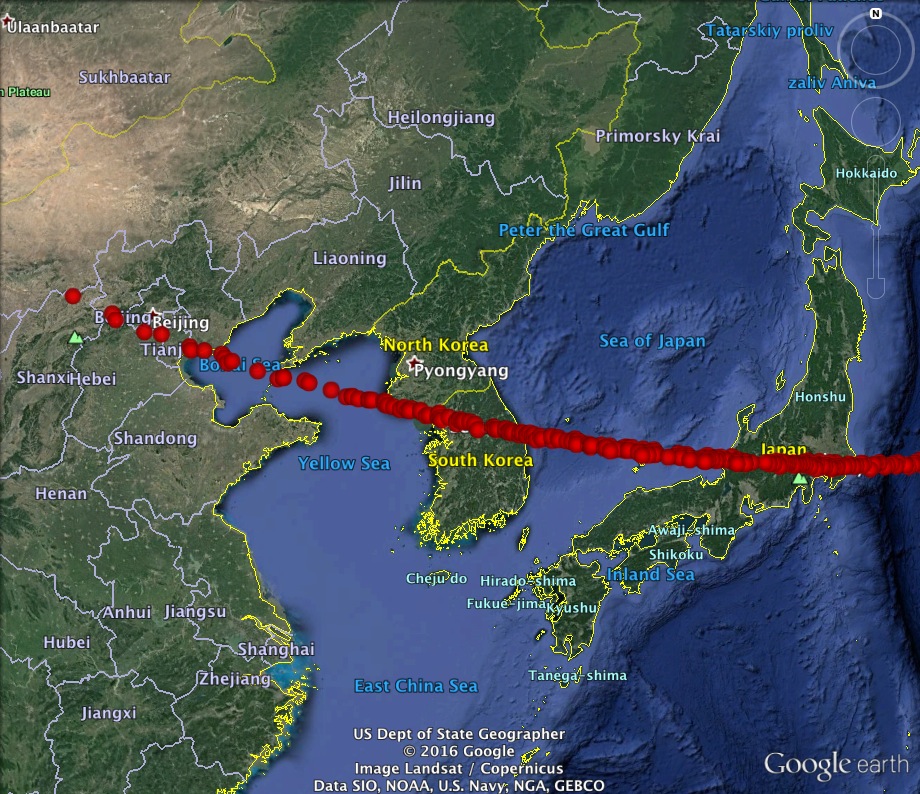
  • Each impactor will move the risk corridor 460km east: 2-3 hits could move the entire risk corridor into the Pacific Ocean
  • The mean blast radius is likely to be 50-150 km, with a worst case of 250km, so the impact point needs to be at least this far offshore
  • Size characterization is less important now that the corridor has been narrowed down – the specifics of how to act are now less sensitive to size
  • Tightening up the uncertainty in the impact ellipse will help
Campaign Design Working Group
  • Given COST and RELIABILITY consideration, two deflection mission options are proposed
  • The first option includes two “active” rendezvous ships carrying nuclear devices to launch in June, 2020 at a cost of $3 billion
  • The second option includes two “passive” rendezvous missions with no nuclear devices, but with 6 kinetic impactors. Rendezvous missions to launch in June 2020 at a cost of $8 billion ($2 billion for the rendezvous spacecraft + $6 billion for the kinetic impactors)
  • For the second option, start with an East-ward deflection plan. Attempt to make March 2020 launch date. The impactors arrive before the rendezvous mission. A total of 6 interceptors provides redundancy because we calculate, based on current estimates of the asteroid properties, that 3 impactors are required to deflect the asteroid. The East-ward deflection plan uses solar electric propulsion (SEP).
  • If the East-ward launch date is not possible, continue spacecraft construction efforts and go for a West-ward deflection launch date, which is in July, 2023. The West-ward deflection will benefit from 7 weeks of data from the rendezvous ship(s). The West-ward deflection plan uses chemical propulsion.
  • Consider 50% failure per mission because of the non-standard circumstances and high stakes
Space Mission Planning Advisory Group
  • Eastward deflection is recommended
  • A precision drop on central Asia (westward deflection) is very difficult
  • Nuclear devices on rendezvous missions are recommended
  • A nuclear deflection will require only 1 successful mission, but a kinetic impactor deflection will require 3 successful missions
Decision to Act Working Group
  • Six eastward deflection missions are recommended for launch
  • Nuclear warheads are recommended for launching on the rendezvous missions
  • Keep all deflection options open (eastward, westward, nuclear)
  • Formation of formal decision-making body is recommended since political coordination at the highest level is required given the complex nature of this problem (4 countries in risk corridor, other countries with space agencies will launch missions)
Communication Working Group
  • Clear, concise, and consistent information must be publicly available
  • Prepare to answer the big questions from the public, including details about the Kinetic Impactor missions. The justification of the east versus west deflection and the decision process for building and launching will need to be made clear.
  • Communication will occur through established processes with the UN to understand, monitor, and plan. Publicly recognisable organisations such as the Red Cross could be asked to lend their support in disseminating information.
  • Instill hope for the future: The nations are working together, we have the technology to solve this problem, and we are doing everything we can to prevent this disaster and to preserve lives and livelihoods.
  • Be ready for challenging questions: How do we know that decision makers are right? Are we using nuclear weapons? Who is going to pay for all of these missions? What if the missions are not successful? What is the Plan B?
Disaster Planning & Management Working Group
  • 2024 is the key date
  • The goal is to plan so that nobody dies from the impact
  • Mitigate economic issues, insurance
  • International agreements between countries in impact zone within 6 months
  • Incentivize other countries to participate due to uncertainty and refugees within 6 months
  • The tsunami threat needs to be considered
Leaders Working Group
  • Slogan: “No fatalities” “Nobody dies”
  • All Possible Earth/Space based observations are funded
  • Number of Flyby Spacecraft – 2 as recommended by scientists (investigate AIDA-like inclusion)
  • Number of Rendezvous Spacecraft – 2 for June 2020 (no nuclear device)
  • Number of Impactor Spacecraft – 8 of multiple designs
  • Impactor missions will be for eastward deflection (westward if failure to meet launch window)
  • No action taken yet to address economic issues
  • The possibility for a unilateral launch of a hypervelocity nuclear mission remains open

Images

  • Background information on the scenario.
  • To study this scenario using the JPL HORIZONS system, click here.
  • Description of NASA/JPL NEO Deflection App.
  • Using the Deflection App for the PDC 2015 scenario.